How a Hedgehog Got Its Own House

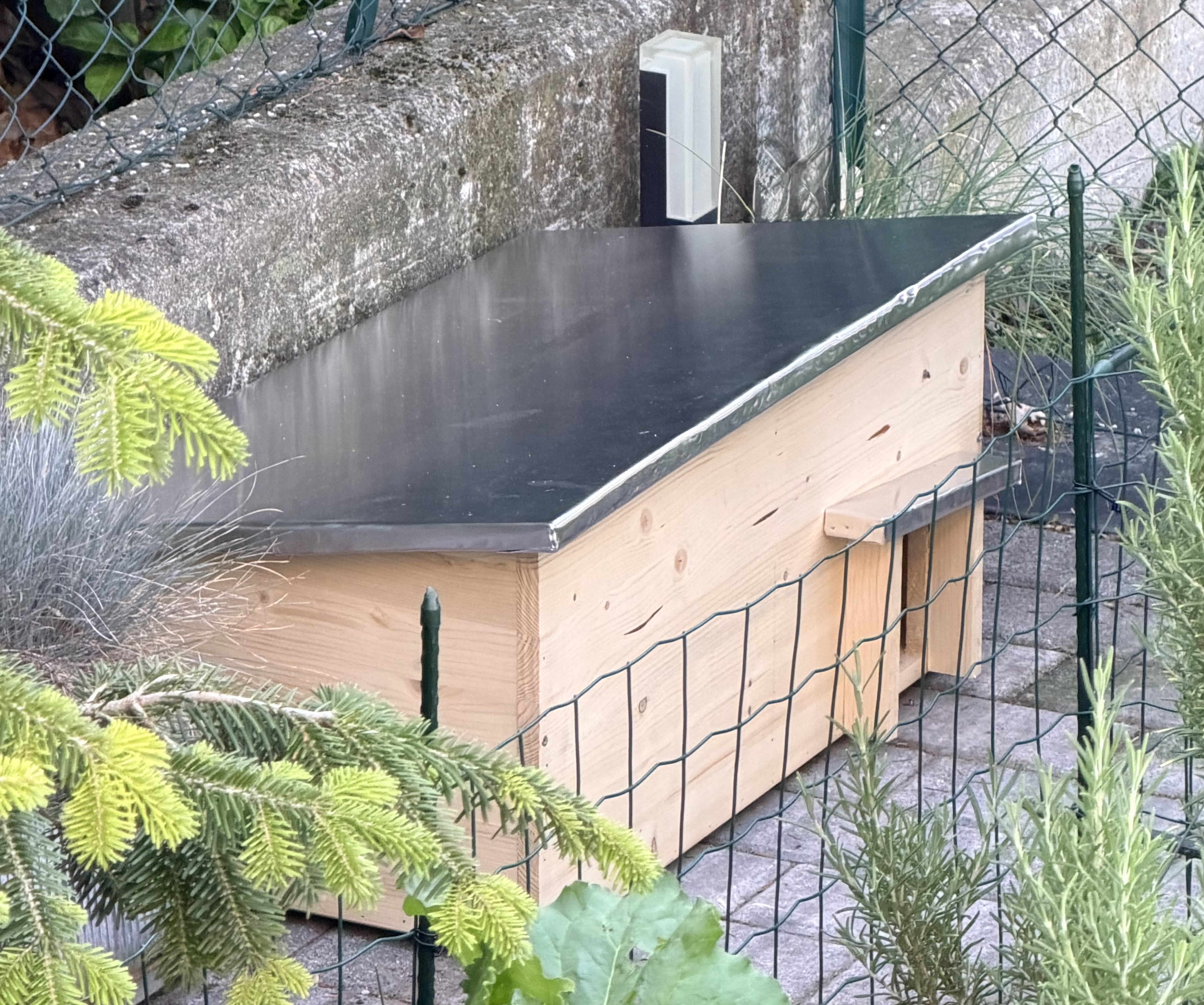
The Case of the Toppled Plant Pot and How a Hedgehog Got Its Own House
Regular readers will know this blog is usually about threat modelling, dependency graphs and the various other security related topics. This post is about none of that. This post is about a hedgehog, although the story does start with an investigation.
The mystery
In the garden we have some shelving where I grow bonsai trees, with a few other pots around them holding chives and other herbs. Between the shelves and a large free-standing bonsai Acer stands a bird table I built, and at its base I had been leaving a small dish of mealworms for the blackbirds.
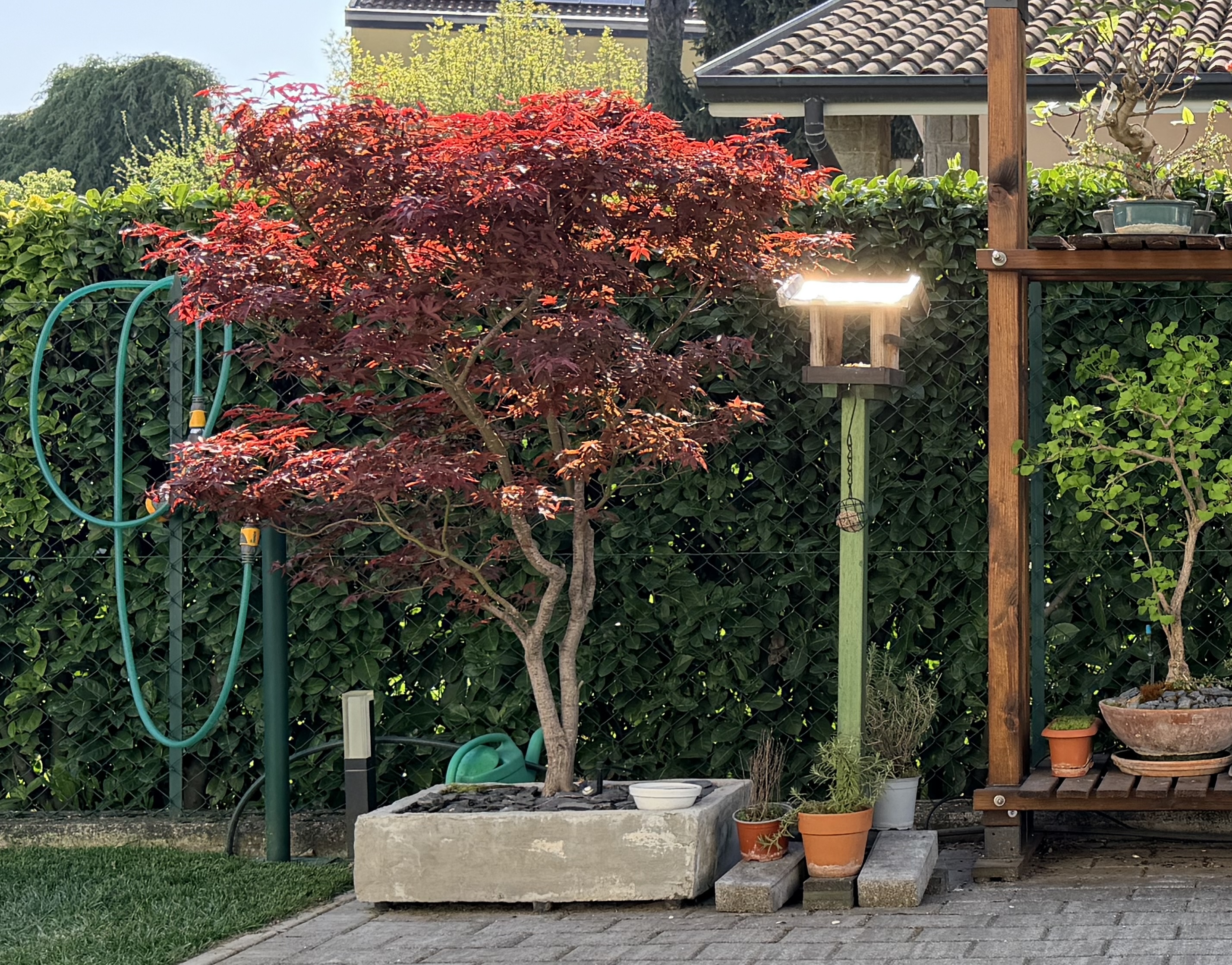
For a couple of mornings running we found one of the herb pots lying on its side. Once is an accident, twice is a pattern, so I did what anyone with CCTV and a suspicious mind does: I went to the footage. I guess it’s an occupational hazard for people who work in security.
Seeing anything near the pot itself was difficult. But while scrubbing through the night’s video I spotted a dark shape moving across the lawn. Too small to be a cat, too big to be a rodent. I watched it for a while, and then the penny dropped, and I was genuinely thrilled: it was a hedgehog.
First response
The first thing I did was make sure there were enough worms out for it every evening, put down after the blackbirds had gone to bed so the two shifts didn’t compete.
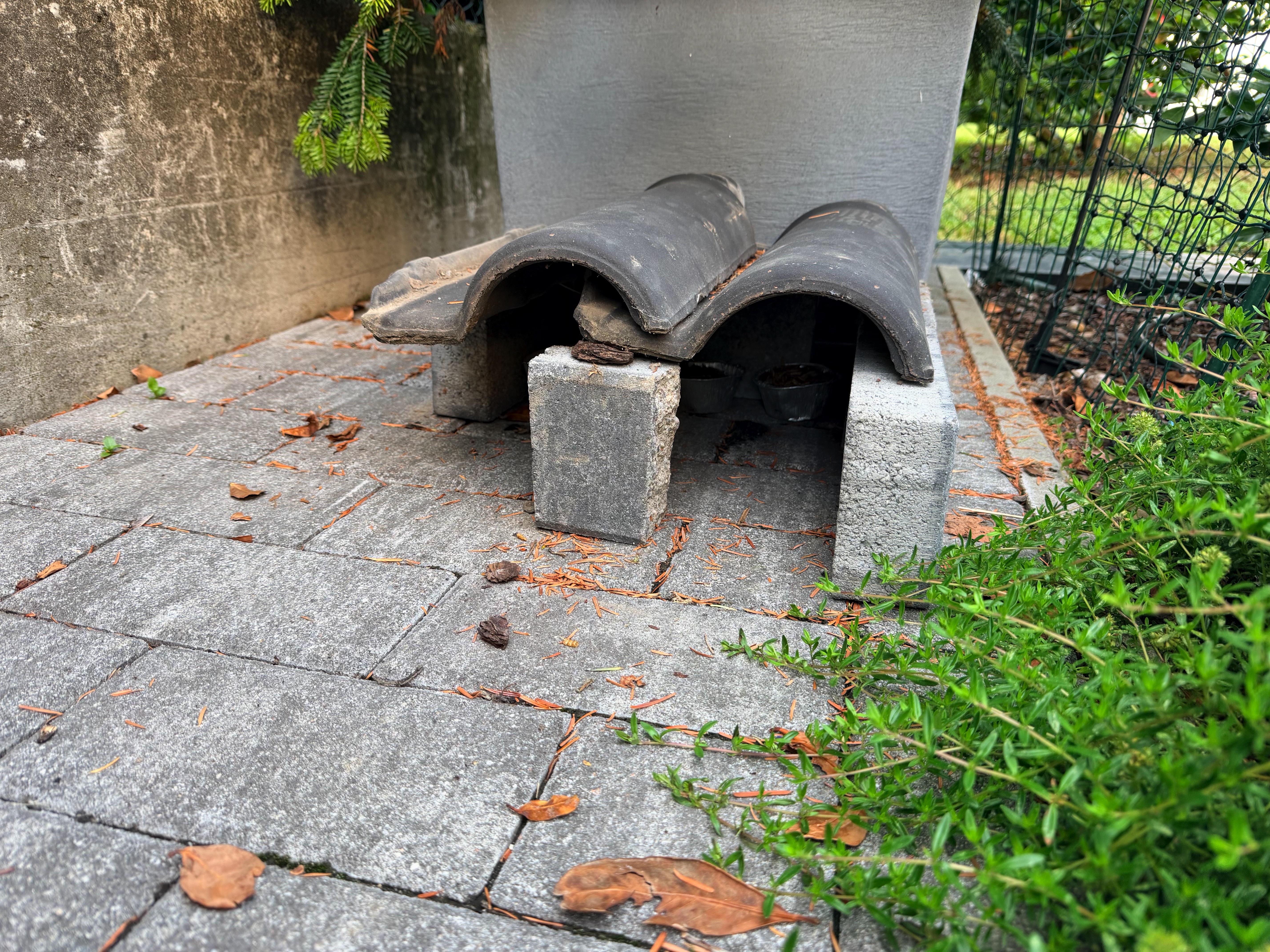
Once I was confident it was coming back regularly, I built it a temporary shelter near the spot where it was clearly getting into the garden: a couple of paving bricks and two spare roof tiles, nothing fancy. Under the shelter went a dish of water, and I ordered food that is specifically formulated for hedgehogs so it gets a balanced diet.
I should highlight this, because it was only while reading up I learned this. Little known fact: mealworms are hedgehog junk food, they’ll eat these and leave everything else given the chance. They are wildly popular with the animal but have a poor calcium-to-phosphorus ratio, and a mealworm-heavy diet is linked to metabolic bone disease in hedgehogs. As an occasional treat, fine. As a staple, harmful. Proper hedgehog food, I went for the dry variety but you could use meaty cat food (chicken, not fish), with fresh water always available and never milk or bread (hedgehogs are lactose intolerant).
They (it turned out to be more than one) have been regular visitors ever since, and you can usually catch them on video at some point during the night, pottering around the garden on their rounds. Pottering undersells it, actually: you would be amazed how fast a hedgehog can move, with sudden spurts of speed and the occasional leap. They are also remarkably good at moving around unseen. More than once I have lost them entirely mid-recording and had to let the video run until they reappeared somewhere else, which for an animal that is essentially a walking pine cone is an impressive trick. When they go to ground like that it usually means they are having a nap, and you will catch them resuming their rounds after about an hour. And they nap a lot, trust me: sometimes two or three times in a single night.
Another little known fact: The Bonsai pot you see there, the shelves for the bonsai and the bird table were a few of my other projects.
You can just see one of the hedgehogs going past the bonsai pot in this video below.
Since I started the project we have discovered that we don’t have one hedgehog but maybe three. We’re not sure how many we really have but we are certain there is a younger smaller one and a large adult, we assume there are two adults but we only have a grainy picture until I get a wildlife cam. I know we have a small one because I saw it one evening in the herb border while I was putting out their food.
From roof tiles to architecture
Bricks and tiles are fine for summer, but winter is a different problem. Hedgehogs hibernate from roughly November to March, and a hedgehog that cannot find a dry, insulated, undisturbed nest site is a hedgehog with worse odds. So the next project was obvious: a proper house and feeding station, designed so it works right now for food and water and then becomes a hibernation site in autumn.
I had a few requirements going in:
- A covered internal compartment for sleeping, so that topping up food never disturbs or frightens the animal
- A roof that hinges or lifts off for access and cleaning
- Feet to keep the box off the ground so it does not rot
- A proper floor for warmth
- A sloping roof clad in aluminium, so rain runs off and the box shrugs off both weather and sun
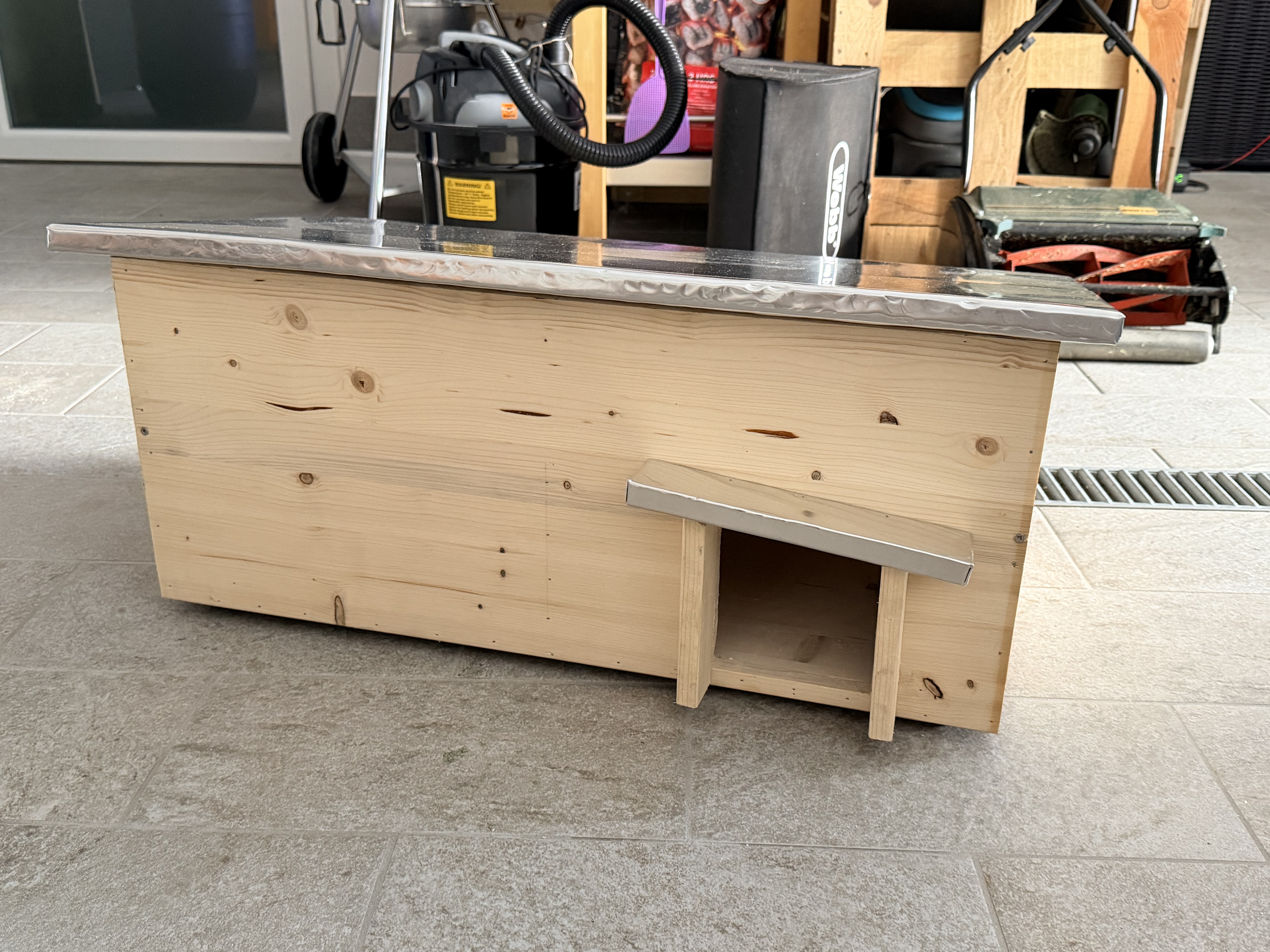
The design that came out of it is a single box, roughly 750 by 400 millimetres, split into two chambers: a feeding area and a sleeping area. A few decisions turned out to matter more than I expected:
- The route in is an L-shape. The external entrance (130 millimetres square, which admits a hedgehog and excludes cats) and the internal doorway sit at opposite ends of the partition. Paws cannot reach round the corner, draughts and light cannot reach the nest, and topping up food in the entrance/food area never exposes the sleeping animal.
- The nest gets its own lid. A loose board rests over the sleeping chamber on battens, level with the partition top. Lifting the main roof only ever opens the food area. The nest lid has a finger hole to lift it out for the spring clean, and the hole doubles as a vent.
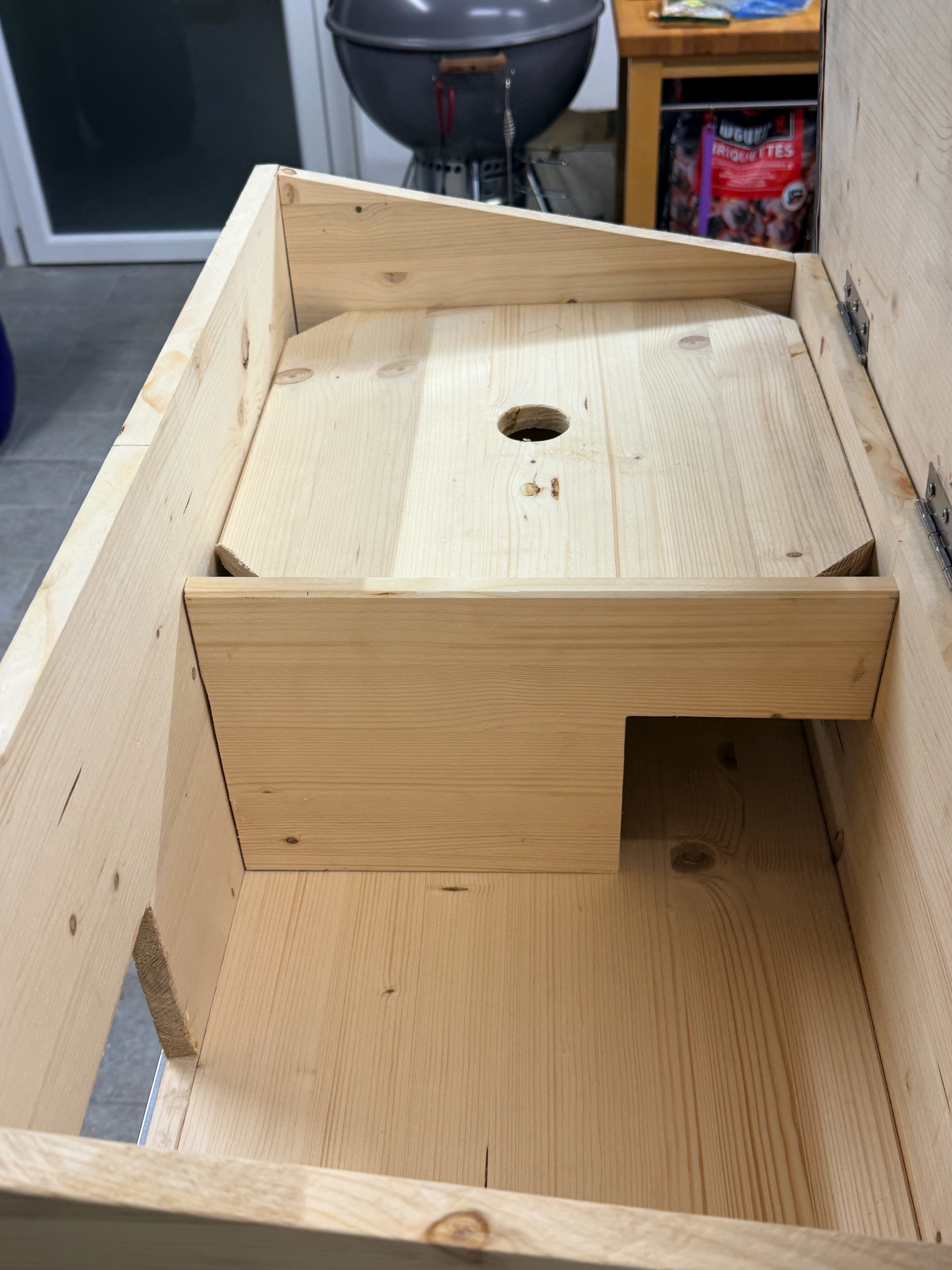
Ventilation without draughts. The nest lid stays flat while the main roof slopes, which creates a wedge-shaped air cavity above the nest: circulation and insulation in one. Clipping the corners off the loose lid, with the battens stopped short of the corners, gives four more small vents at the perimeter. That matters in winter: a hibernating hedgehog’s breath condenses under a solid lid, and damp bedding is more dangerous to it than cold.
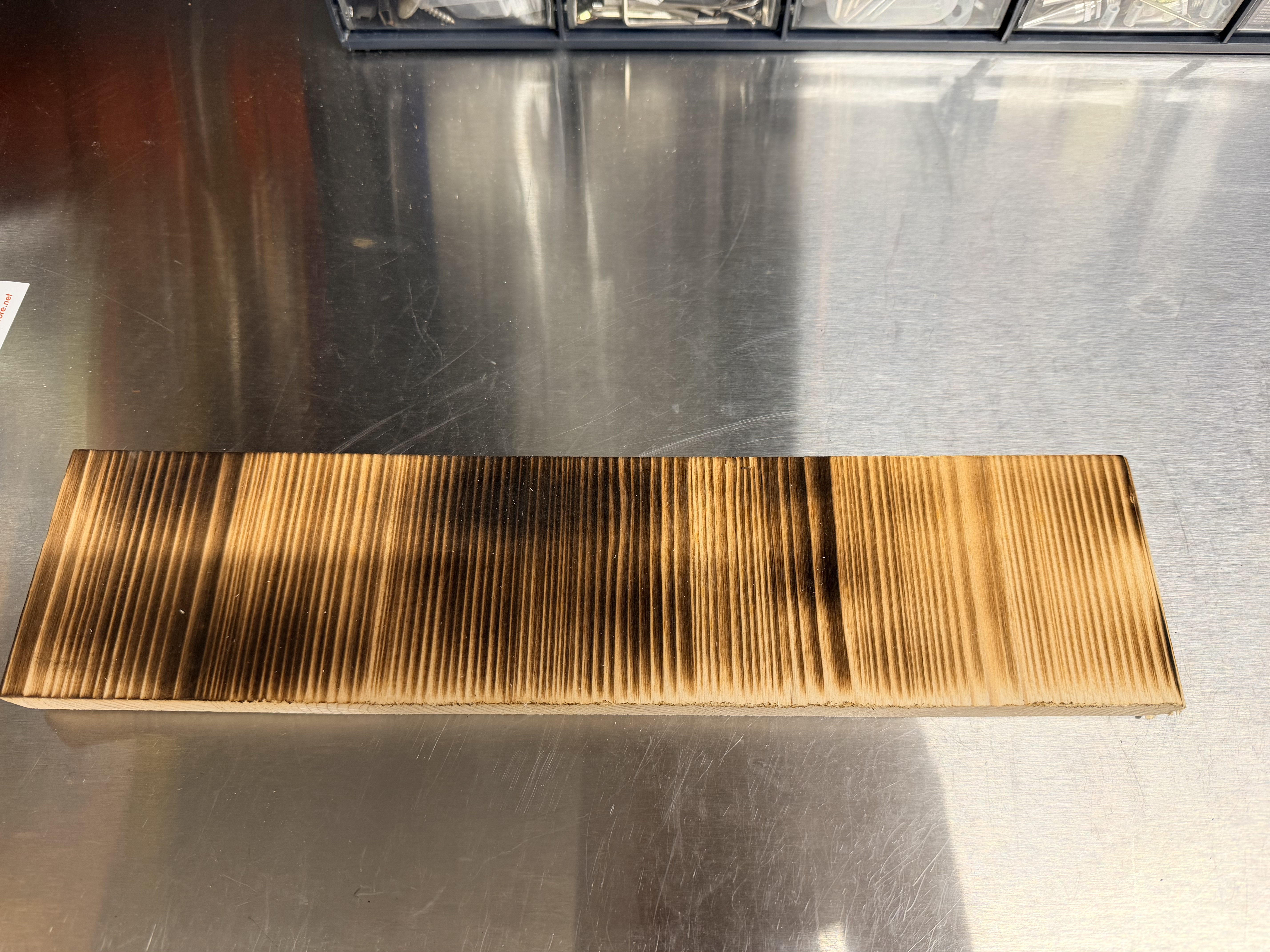
Nothing chemical inside. Hedgehogs have sensitive noses and will reject a nest that smells of chemistry. The interior stays raw wood. For the exterior I evaluated water-based preservative against flame-charring the surface (yakisugi style), which on solid pine boards gives rot and insect resistance with zero chemicals. I wasn’t very good at yakisugi (see the photo of my test on a piece left over), I couldn’t get an even finish on the piece I tried, so I ended up going with the water-based preservative. One caveat if you fancy the same: do not char plywood, as the face veneer burns through to the glue line before you get a useful char layer.
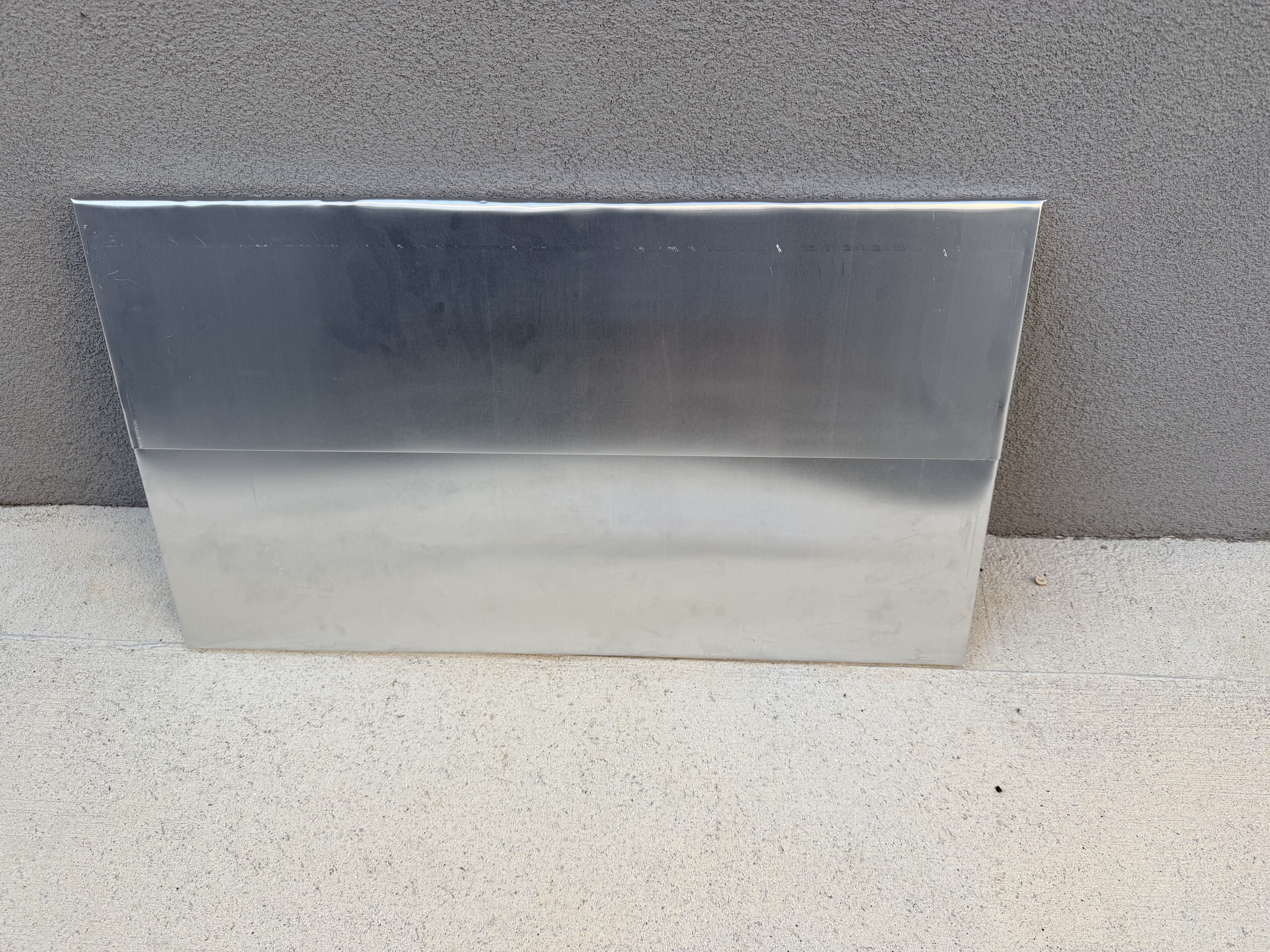
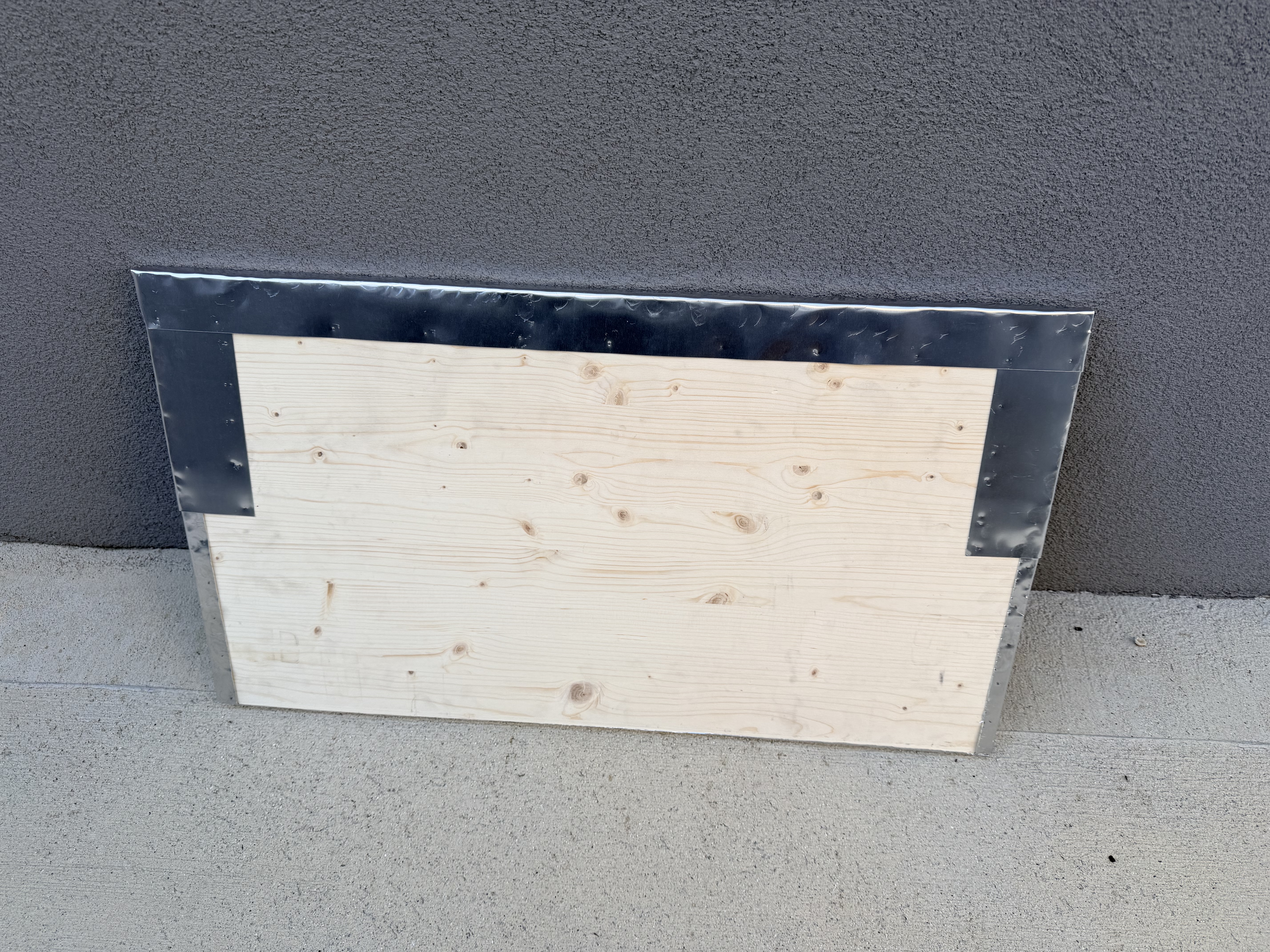
- No fixings through the roof face. The aluminium is folded down over the roof edges and pinned into the edges only, so there is no screw hole in the weather face to leak through. You can use two pieces here overlapping but put the lower half on first and then the upper half overlaps it.
The plans
The full build plan, with dimensioned drawings, a cutting layout that gets every part from a single sheet, an exploded construction diagram and the seasonal usage notes, is here:
So if you want to build one for a hedgehog visiting your garden, feel free to use my design. I did add something else not in the plan which was the sloping roof around the entrance to avoid the rain getting in to the feeding area.
What happens next
The timeline works out rather neatly. Built now, the box gets a couple of weeks airing, then goes into service as a feeding station through late summer so our visitor gets thoroughly acquainted with it. Bedding material (dry leaves, barley straw or hay) goes in around September, and the hedgehog does the actual nest-building itself.
Now I positioned the house on Saturday evening and I imagined it would take a few days before any of them even entered the house, so I put a dish of food elsewhere as well. To my surprise on Sunday I saw they had been in, eaten and drunk but also that they had been in to the side where I had placed some hay because there were strands in the entrance. In the evening I went to put fresh water and top up the food but found there was more hay in the entrance than in the morning and more of the food had been eaten. So I peered through the vent holes and was so happy when I saw the small one sleeping in the corner under the hay. I didn’t investigate further but there may have been more in there. They have immediately accepted their new home.
From November onwards the rule is simple: the sleeping side does not get opened, full stop, while water and dry biscuits stay available in the lobby because hedgehogs do rouse occasionally mid-hibernation.
A hedgehog needs to weigh roughly 600 grams to survive hibernation. If your autumn visitor still looks small in late October, the kind thing is not more biscuits, it is a call to your local wildlife rescue (in Italy, a CRAS).
It started with a toppled pot of chives. It has ended with me producing engineering drawings for a resident I have never formally met. We are now acquainted if not formally with one member of the family. I’ve also changed the netting around the herb border and cut a small section so the hedgehogs can get in and explore.
As their numbers are falling in Europe, let’s hope this little family now expands. I’ll keep you posted if I learn how many there really are and on their progress. If I get a wildlife cam I’ll post a video and a few photos too.
You may also like:

A Night in the Life of Our Hedgehog (Caught on Wildlife Cam)
This is what some of you have been...