SAST vs Claude Code Security: A Deep Dive


SAST vs Claude Code Security: A Deep Dive
In my previous post on Why SAST is Broken!, we explored some of the challenges and limitations of traditional static analysis tools. Now, with the preview release of Claude Code Security last Thursday, there’s been a lot of buzz, ranging from curiosity to speculation (and even some drama in the stock market!). But let’s pause for a moment and reason through what’s actually changed.
After reading through the documentation, I found myself with more questions than answers. While I hope to try it out soon, here are some key aspects that caught my attention and make this tool particularly intriguing:
- It performs static source analysis.
- It analyzes code in parallel, likely speeding up the process.
- It includes cross-file analysis (necessary for understanding data flows).
- It builds data flows to map how information moves through the system.
- It claims to understand context.
- It mentions cross-component analysis (though this needs clarification).
- It promises to validate findings (which also raises some concerns).
In my earlier post, “Why SAST is Broken!”, I highlighted the importance of context in security analysis, something that SAST tools often fail to handle effectively. On the surface, Claude Code Security appears to address this issue, which is a promising start. But let’s dig deeper into some of these features and my concerns around them.
Key Concerns and Observations
Cross-Component Analysis: What’s Really Happening?
I’ve previously discussed the importance of cross-repository or cross-component analysis, especially when dealing with second-party code or large, distributed systems. From what I understand, Claude Code Security does not perform binary analysis, which limits its scope to source code analysis. But here’s where my concern arises: is this tool just performing Software Composition Analysis (SCA) by identifying known vulnerabilities in third-party open-source libraries? If not, does it actually go deeper into cross-repository analysis?
Some questions we need answers to:
- How does it gain access to the metadata required for cross-repository analysis?
- Does it have access to all your repositories, or is it only designed for monolithic applications or smaller projects?
If Claude Code Security lacks full organizational context, it could miss entire classes of vulnerabilities. For example:
- Service-to-Service Interactions: Many vulnerabilities arise from poorly designed service contracts.
- Internal Libraries: These are often treated as black boxes, and without guidance or metadata, the tool may not see inside.
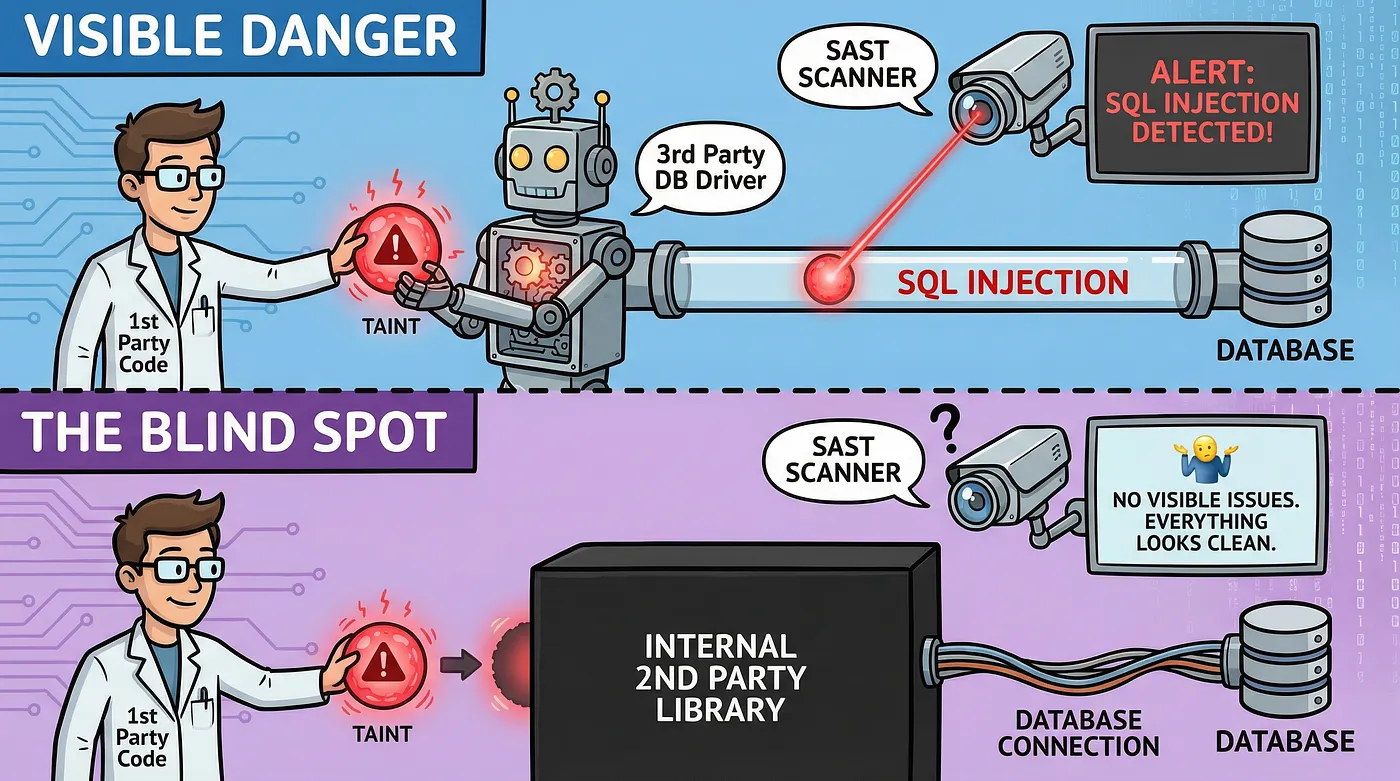
A Potential Solution: Building Organizational Context
One way to address this gap would be to create a system where Claude Code Security generates consistent, versioned metadata for every service or internal library it scans. This metadata could then be reused across projects to provide broader context for future scans.
Here’s how it might work:
- During a project scan (e.g., at release time), the tool generates metadata about the service or library being analyzed.
- This metadata is versioned and stored, corresponding to the library version being released.
- As part of a merge or pull request review, engineers could validate this metadata to ensure it accurately reflects the service. This process could help identify incorrect assumptions early on.
- When scanning a new project, Claude Code Security could pull in the metadata from previously scanned dependencies or services, enabling cross-repository taint analysis.
By automating this process, the tool could build a comprehensive organization-wide context over time, improving its analysis capabilities. However, it remains to be seen whether Claude Code Security includes such functionality out of the box.
This additional context may also support AI in design, threat modeling and code generation of new projects or features (secure by design) as oposed to at the end of the pipeline which would be even better.
Validation of Findings: A Double-Edged Sword?
One feature that caught my attention, and raised alarm bells, is the claim that Claude Code Security validates findings. But what exactly does this mean?
What Does “Validation” Entail?
My concern here is whether this involves creating proof-of-concept (POC) exploits to verify vulnerabilities. If so, this could be problematic in several ways.
Why This Could Be Risky
If the validation process involves anything beyond simple mocking, it could be disruptive, not only in development environments but potentially in other critical systems. Consider the possible impact of exploit POCs:
- Data Tampering: Modifying, deleting, or corrupting data.
- Denial of Service (DoS): Overloading systems and causing outages.
- Privilege Escalation: Gaining unauthorized access to sensitive areas.
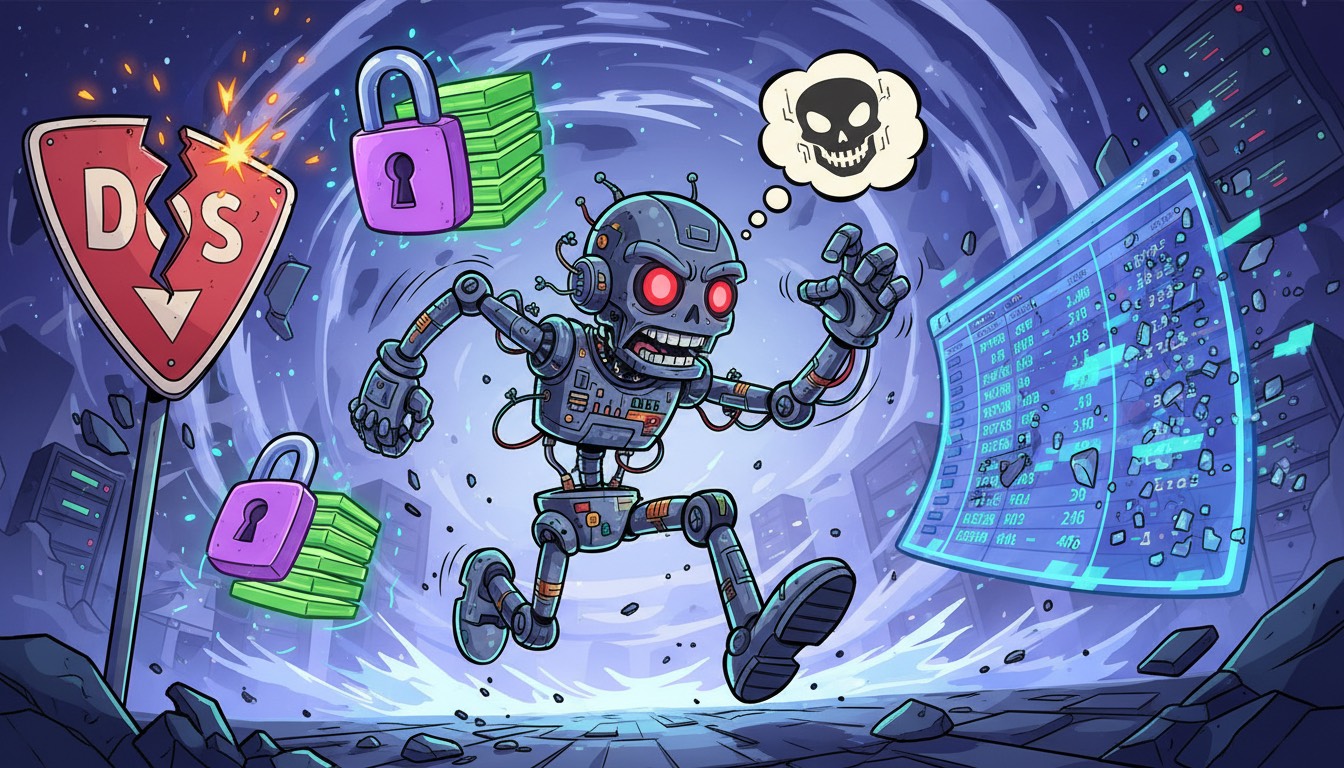
While I assume the developers of Claude Code Security have considered these risks, assumptions are dangerous. As the Italian proverb goes: “Fidarti bene, non fidarti meglio!” (Trusting is good, but not trusting is better!).
I’ll need to test this feature myself to see how it works in practice. Ideally, if the tool does create POCs, these should be mocked and safely sandboxed to avoid unintended side effects.
Final Thoughts: Hopeful but Cautious
Claude Code Security seems to address some of the key criticisms I’ve had of traditional SAST tools, particularly around understanding context. However, there are still many unanswered questions, especially around its capabilities with cross-component analysis and the implications of validation.
I’m looking forward to trying it out soon to see how it performs in real-world scenarios. If I can get it to analyze code the way it should be done, I’ll be sure to share my findings here.
Stay tuned!
You may also like:

Sparse or Dense? Claude Mythos, Dan Geer, and Where We Should Actually Be Spending Our Effort
Last week, Anthropic announced Claude Mythos Preview and...

Why SAST is Broken!
Why SAST is broken, and how it could...